
 close friend whose name we won't mention here fell for a scam that started like a story you might expect from a movie: he was contacted by someone claiming to be a former United States military officer, now based in Malaysia, supposedly scouting investment opportunities, and looking for a serious relationship after losing a spouse.
FROM "ROSES" TO RED FLAGS
The messages were steady, friendly, patient—nothing pushy, just a conversation that slowly started feeling personal. Weeks turned into months, promises about eventually meeting in Kuala Lumpur one day were made, maybe even getting married, and small financial requests began to trickle in—a temporary issue here, a "small investment opportunity" there—until they became more frequent. Friends eventually intervened, and that was the only thing that stopped it, just before she was about to book a flight to see him.
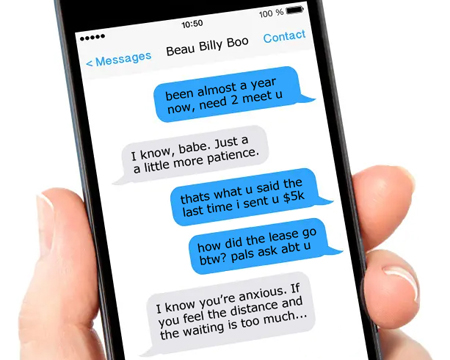
Snapshot of a typical text message exchange between an aggrieved lover-benefactor and online partner (fictitiously named Beau Billy Boo) who is on constant can't-meet-just-yet mode.
Stories like this aren't rare, and the reason they keep happening is that scams like this are carefully engineered. They prey on trust, hope, and the human tendency to want to see the good in people. And while this template is old, online scams today have evolved in ways that make them even harder to spot.
MODERN SCAMS ARE EVERYWHERE
 omance scams are just the tip of the iceberg. The online scam landscape has grown in ways that can catch anyone off guard, even people who think they're smart and tech-savvy.
Take text message scams, for example. You might get a message that looks like it's from your phone provider or a delivery service, claiming you're owed points or a refund, and all you need to do is click a link. It feels harmless, familiar even, but clicking that link can give scammers access to your accounts or install malware on your device. These messages are no longer easy to spot—new messaging protocols let them bypass traditional spam filters, so they can look almost identical to legitimate communications.
Fake investment and crypto scams are another growing problem. Someone will promise an app or a platform where your money will grow exponentially, complete with a dashboard that shows real-time gains, charts, and even "customer support" interactions. Everything looks real, but the second you try to withdraw, it's either impossible or you're hit with sudden "processing fees" or "verification deposits." By the time the alarm goes off, thousands—sometimes life savings—are gone.
Job scams aren't just about stealing your paycheck; they're about stealing your personal information. You might see a posting that looks legitimate, apply online, and then be asked to submit sensitive info—copies of your ID, bank details, or social security number—before you've even spoken to anyone. The "job" is just a cover to collect data that can be used for identity theft, phishing, or other fraud. Some even run fake video interviews to make it look real. By the time you realize there's no job, the information is already in the wrong hands.
Hijacked or cloned social media accounts are another common tactic. You might get a message from a friend on Facebook or Messenger asking for an urgent loan or help with a "problem," but the account isn't theirs—it's been hacked or cloned. Scammers rely on familiarity: you trust it's really your friend, and because the request seems urgent, you might act before thinking. By the time you realize it's a scam, your money or information could be gone.
 hese days, technology is making all of this even trickier. Scammers can use AI to make fake profiles that look completely real, or even mimic voices in short audio clips. Some can set up video calls that feel like a live conversation. It doesn't mean everyone you talk to online is fake, but it does mean the old assumptions—like "if I can hear them, they're real"—aren't always reliable anymore. It's just another way scammers mix familiar tactics with new tools to make their schemes feel legitimate.
Other common modern scams include phishing emails that look indistinguishable from real companies and tech support fraud where someone claims your computer has been compromised. They all work on the same principle: create urgency, offer legitimacy, and give you just enough reason to let your guard down.
WHY SMART PEOPLE STILL FALL FOR SCAMS
You might think, "Sure, that's bad for some people, but I'd never fall for anything like that." The truth is, these scams are designed to work on almost everyone, including intelligent, careful people, and the reason isn't a lack of smarts—it's the way they exploit normal human behavior.
 ost scams don't hit you with a huge demand right away. They escalate slowly, building familiarity and trust over time. You start by exchanging messages, maybe sharing some personal details, and then over weeks or months, small requests for help or money start appearing. Each one feels reasonable in context, and you rationalize it because you've already invested emotionally or socially. That's called consistency bias—once you've said yes a few times, it's psychologically harder to say no later.
Then there's emotional attachment. Even in non-romance scams, like job or investment scams, people start to care about the outcome. You've imagined yourself in the new role, or your "investment" looks like it's growing, and you begin defending it in your own head and even to friends. The longer it goes on, the more your brain treats it as real, which makes pulling back feel like a loss or an admission that you were naive.
 solation is another big factor. Scammers often encourage secrecy: "Don't tell anyone, they won't understand," or "This is private and special between us." Even subtle pressure like this can make you second-guess anyone who tries to warn you, and it removes the outside perspective and objective reasoning that often prevents people from getting caught.
The takeaway is simple: these scams work because they're human, not because they're clever. They rely on trust, hope, and the natural ways our brains respond to consistency, emotion, and social validation. Understanding that is the first step to protecting yourself.
HOW TO PROTECT YOURSELF WITHOUT PARANOIA
You don't need to distrust everyone online or live in constant fear, but a few simple habits go a long way:
Pause before you act. If someone asks for money, sensitive info, or a personal favor, take a step back and ask whether it makes sense. Pressure is a manipulation tactic.
Verify independently. For jobs, check the company website or call HR directly. For investments, see if the platform is registered with official authorities. For people online, reverse image search their photos or double-check details.
Don't hand over sensitive info too quickly. IDs, bank details, social security numbers—these are valuable and should only go to verified, trusted parties.
Bring in a second perspective. Share the situation with a friend or family member, preferably someone skeptical. Isolation is a scammer's best friend.
Use basic security tools. Two-factor authentication, antivirus, and keeping your apps updated won't stop scams entirely, but they reduce risk and slow down attackers.
Treat emotional manipulation as a red flag. If you feel guilt, pressure, or unusual attachment to someone you've never met in person, that's a warning sign. Pausing and thinking critically is your strongest tool.
 he point isn't paranoia—it's simple habits that give you friction, perspective, and time to notice red flags. No matter how advanced technology gets—AI profiles, deepfakes, cloned voices, or fake dashboards—awareness, judgment, and involving someone else are still stronger than any scam.
Pause. Verify. Involve someone else. That simple habit protects you better than any algorithm ever could. (APJ)