
 T'S ALWAYS FELT A LITTLE OFF: TAYLOR SWIFT IS ENDLESSLY TEASED for writing songs about her exes, while Adele can release an entire album about heartbreak, and Alanis Morissette can absolutely torch and "stalk" an ex on several tracks—and people call it powerful, iconic, even therapeutic.
Meanwhile, Swift drops a single line about a scarf, and suddenly the internet acts like she's committed a social crime. It doesn't really add up—until you step back and look at the bigger picture.
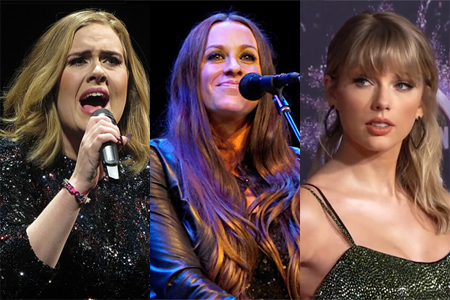
Taylor Swift gets teased—roasted, even—for writing about her exes, while Adele and Alanis Morissette release entire heartbreak albums "hounding" theirs and are universally celebrated and hailed as iconic.
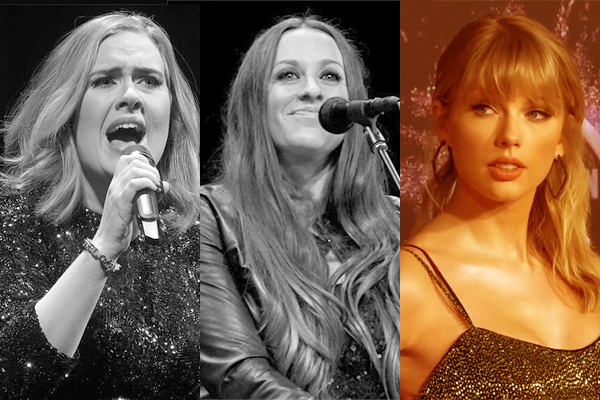
THE NARRATIVE AROUND HER WAS CREATED WAY TOO EARLY
 aylor Swift became famous almost overnight, as a teenager in the spotlight. Her dating life was treated like a spectator sport long before she had fully become an adult.
From the moment she debuted on the country charts, the media had effectively scripted her story: the girl who writes breakup songs. Whether that label was accurate or fair didn't matter—the narrative stuck.
By the time Swift started releasing albums like Fearless and Speak Now, she was already boxed in as "that girl who writes songs about boys." Every relationship, every heartbreak, every innocent lyric was dissected under a microscope.
Compare that to Adele or Alanis Morissette: neither artist had every early relationship picked apart in real time. Alanis's Jagged Little Pill and Adele's 21 were received as raw, emotional artistic statements, not tabloid fodder.
In other words, context matters. Swift's breakup songs are read as episodes in a soap opera; Adele and Alanis get celebrated for crafting timeless art.
THERE ARE DEFINITELY DOUBLE STANDARDS AROUND EMOTIONS
 op culture loves to assign meaning—and judgment—based on who's expressing emotion. Rage in rock? Empowering. Sorrow in soul? Deep. Feelings in pop—especially specific ones? Suddenly it's "dramatic," "petty," or "too personal."
Taylor Swift's lyrics often capture intensely personal moments: a missed phone call, a fleeting glance, a scarf left behind. Yet because she's young, female, and in pop, those same emotions get labeled as immature. Meanwhile, a rock singer screaming about betrayal or a soul artist lamenting heartbreak is seen as profound and relatable.
It's not that Swift feels differently—it's that the world interprets her feelings differently. Same content, different reaction.
GENRE BIAS IS REAL
 he musical lens matters too. Adele is soul. Alanis is rock. Taylor Swift started in country and transitioned into pop—a genre that, unfairly, is often treated like glittery fluff rather than serious storytelling.
So the exact same breakup themes are received very differently depending on the genre:
- Rock heartbreak? — Bold and edgy.
- Soul heartbreak? — Profound and timeless.
- Pop heartbreak? — "OMG, which ex is she talking about this time???"
The criticism isn't about the lyrics themselves—it's about assumptions attached to the genre. Pop is unfairly dismissed as lightweight, while other genres are given automatic credibility.
The "detective culture" around Swift changes how people hear her songs
 wift has cultivated a fandom that loves decoding her lyrics, hunting for Easter eggs, and matching lines to real-life events. This is part of the fun for fans, but it has a side effect: everyone, including casual listeners and critics, starts approaching her songs as puzzles rather than pieces of art.
Instead of evaluating a song on its emotional resonance or musicality, the conversation often becomes:
- Who is this referencing?
- What relationship does this line correspond to?
- Is this about a specific date or event?
 Adele and Alanis aren't subjected to this kind of obsessive scrutiny. Their heartbreak is experienced as universal emotion, while Swift's heartbreak becomes a social game.
HER FAME AMPLIFIES EVERY CRITIQUE
Let's be honest: Taylor Swift is one of the biggest pop stars in the world. And with that level of visibility comes intense scrutiny. Every lyric, every outfit, every relationship is magnified in ways that smaller or less high-profile artists rarely experience.
Other artists can explore heartbreak repeatedly without anyone blinking; Swift gets labeled repetitive. Revisiting emotional themes is literally what almost every songwriter does—but her fame makes these choices appear like patterns worth critiquing. The higher the platform, the sharper the criticism.
So... why does Swift get more flak?
THE SWIFT FLAK
It's not because she writes about exes more than Adele or Alanis. It's not because her songs are more personal or melodramatic. It's not even about her lyrics.
The real factors are structural:
- Early media framing: the world started writing her narrative when she was barely out of adolescence.
- Genre bias: pop is treated differently than rock or soul.
- Age bias: young women are often infantilized in ways adult men or women aren't.
- Gendered expectations about emotion: society sees female emotional expression as gossip; male or neutral emotional expression is art.
- Fan culture that encourages decoding: turning songs into puzzles invites obsession over speculation.
- Massive fame: every move is magnified and dissected.
It's a perfect storm of perception.
 t the end of the day, Adele, Alanis Morissette, and Taylor Swift are all doing the same thing: turning life into art. The difference is the lens through which the public sees them. Taylor gets flak because we're paying more attention to the story behind the song than the song itself—and that says far more about societal assumptions than it does about the singer-songwriter.
So the next time you hear someone snark about Swift's lyrics, remember: the problem isn't the scarf, the heartbreak, or the love story. The problem is the way we, as a culture, choose to watch her live it. (APJ)