
 HEN YOU THINK OF A BUDDHA, WHAT POPS INTO YOUR MIND? For many, it's the cheerful, rotund "fat laughing Buddha" grinning back at you from a Chinese restaurant or gift shop. But Buddhism's visual story is far richer, stretching across centuries, cultures, and philosophies—and not all Buddhas are created equal.
WHO IS THE FAT LAUGHING BUDDHA?
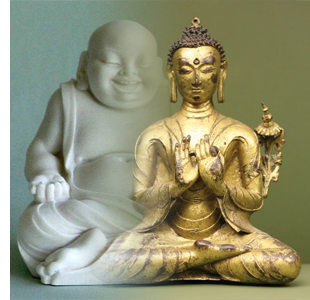 First, let's set the record straight: the "fat laughing Buddha" isn't actually Buddha. He's Budai, a Chinese monk from the 10th century, famous for wandering with a cloth sack, laughing, and spreading joy. His plump belly and carefree smile symbolize abundance, contentment, and a lighthearted approach to life. Over time, Chinese folk traditions blended Budai with Maitreya, the future Buddha, giving him a cosmic twist: the idea that he might be an incarnation of a Buddha yet to come.
MAITREYA: THE FUTURE BUDDHA
Now, Maitreya is a different figure altogether. In Buddhist cosmology, he's the next Buddha, destined to appear when human society is ready—potentially millions of years in the future. He represents hope, renewal, and the promise that the Dharma (Buddhist teachings) will return when it's needed most. Unlike Budai's approachable joy, Maitreya embodies aspiration: a reminder to practice ethics, compassion, and mindfulness in preparation for a better age.
ZEN AND THE LOVE OF PLAYFUL WISDOM
 eanwhile, Zen Buddhism—originating in China as Chan and spreading to Japan—loves figures like Budai precisely because they break the mold. Zen emphasizes direct experience, sudden insight, and challenging expectations. A laughing, carefree monk who refuses to sit stiffly in meditation might seem irreverent—but that's the point. Zen teachings suggest that wisdom often shows up in unexpected, playful ways.
HOW BUDDHIST ICONS EVOLVED ACROSS CULTURES
Early Buddhists might have raised eyebrows at a laughing Buddha. Traditional Indian depictions of Gautama Buddha are calm, serene, and meditative, reflecting renunciation and balance. Emotion, humor, or exaggerated body features were seen as worldly distractions. But as Buddhism traveled across Asia, it adapted. China added warmth and human relatability, Japan streamlined and emphasized paradoxical wisdom, and Tibet created intricate, symbolic images designed to train the mind.
JOY AS A TEACHER
 ext time you see a smiling, round Buddha statue, remember: it's a product of centuries of cultural evolution. Gautama Buddha taught mindfulness and liberation, Maitreya offers hope for the future, and Budai reminds us that enlightenment can come with a laugh. They may look different, but together they show that awakening isn't one-size-fits-all—and sometimes, joy is as much a teacher as discipline. (APJ)