
 FTER A FEW TRAIN PLATFORM ASSAULTS in some parts of Manhattan, something weird started happening in my circle of friends and acquaintances in Brooklyn. People who usually hopped on the subway without thinking suddenly hesitated. Some avoided Manhattan altogether. Not forever, not permanently. Just for a while. Until the news moved on.
HOW TRAGEDY REWRITES OUR PERCEPTION
Nothing about the city had fundamentally changed. The trains ran. The lights were on. The streets were still there. What changed was the stories.
This isn't just a New York thing. It's a human thing.
A sightseeing helicopter carrying a Spanish family crashed into the Hudson River near Manhattan on April 10, 2025, killing all five family members and the pilot; authorities reported the family was partially celebrating a birthday during the tour. (The Guardian).
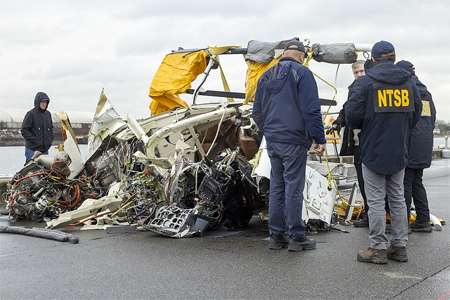
National Transportation Safety Board investigators surveying the wreckage of the helicopter that crashed into the Hudson
A hot-air balloon in Santa Catarina, Brazil, caught fire and crashed on June 21, 2025, killing eight of the 21 passengers and injuring 13 others. (VPM News).
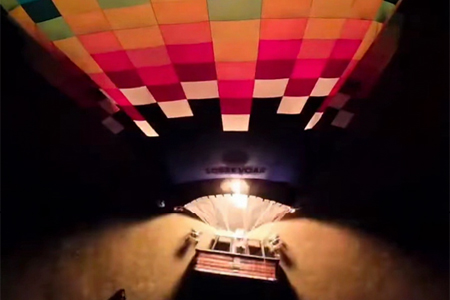
The BR-MEA3 hot-air balloon involved in the Santa Catarina accident, pictured in 2024
A passenger plane crash in Russia in 2019 tragically claimed all on board, a routine flight that ended in catastrophe and left families waiting for arrivals that would never come. The images of smoke and flame on the runway lingered far longer than the headlines did.
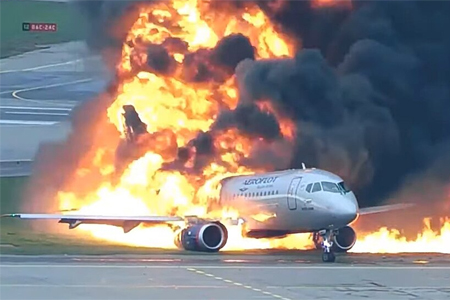
The Aeroflot Flight 1492 aircraft caught fire immediately after the emergency landing.
The Indian Ocean earthquake and tsunami in 2004 killed tens of thousands and displaced countless communities, its waves erasing coastlines and altering lives across multiple countries in a matter of hours. Entire towns were swept away, and the scale of loss reshaped not only landscapes, but generations.
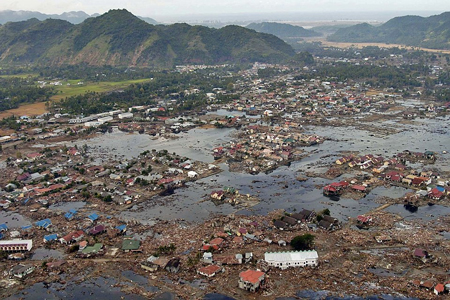
A village near Sumatra coast in ruins after the tsunami that struck South East Asia
Suddenly, entire ways of getting around—or whole places—feel unsafe. A helicopter tour becomes a risk. A balloon ride becomes a gamble. Even a familiar stretch of coastline can take on a quieter, more ominous tone in the imagination.
The mind reacts. Fast. It doesn't pause to calculate probabilities or compare long-term safety records. It reaches instead for the most vivid image, the freshest headline, the story it just absorbed. And it isn't about statistics. It's about narrative—the way a single event can loom larger than a thousand uneventful journeys.
AVAILABILITY BIAS IN ACTION
 sychologists call this availability bias. Basically, we judge how risky something is based on how easily examples come to mind. Not how likely it actually is.
Transport disasters are perfect triggers. They're sudden. They're vivid. They involve lots of people. They stick in memory. One headline can outweigh millions of uneventful trips.
Think about it. Plane crashes scare people more than car trips, even though driving is far riskier. A short run of train stories can make platforms feel unsafe, even though the baseline risk hasn't changed. The mind swaps memorability for probability.
FAMILIARITY DOESN'T PROTECT YOU
What's striking is how quickly familiarity collapses.
Brooklyn locals should feel comfortable in Manhattan. They know it. They've been there hundreds of times. Yet a few widely reported incidents temporarily reclassify it as dangerous. The city gets narratively tagged.
Visitors from overseas are even more affected. Some friends have skipped New York entirely because of news stories. Not because they experienced danger. Not because they crunched the numbers. It's because headlines assigned the city a risk label, and their minds accepted it unreservedly.
Once a story lodges itself, the fear scales with it. Geography barely matters. Distance barely matters. Familiarity barely matters. The headline does all the work.
DIFFERENT DISASTERS, SAME RESPONSE
 e like to separate catastrophes into neat boxes: natural disasters, mechanical failures, and man-made violence. They feel different morally, and causally. But cognitively? They collapse into the same category.
Villages disappear under a deluge. Entire cities collapse under an earthquake. Wildfires burn down entire counties. Helicopters crash, trains derail, platforms see violence. Different scales, different causes; same effect on the mind.
All of them do the same thing to our brains:
- Make us feel like we have no control
- Make failure seem total
- Make danger feel ambient rather than situational
Whether it's a hurricane, a mechanical failure, or a random assault, the mind stores them as "places or modes of travel to be careful about", even if the actual risk is tiny.
WHY MOVEMENT MAGNIFIES FEAR
 hese fears cluster around movement for a reason.
When you're a passenger—on a plane, a train, or standing on a platform—you've handed control over to a system. You can't see it all. You can't directly influence it. When the system fails in public, it feels catastrophic. Total. Immediate.
Meanwhile, everyday risks get ignored. Driving to work. Crossing the street. Stress, diet, sleep. These are statistically significant, but boring. No montage. No breaking news. No collective gasp. So they barely register in memory.
Movement amplifies narrative weight. It's why these stories stick and behavior changes.
QUIET WAYS PEOPLE COPE
 umans deal with this without realizing it. Some avoid the place. Some skip the trip. Some change how they move. Others outsource risk in ways that aren't obvious—like getting insurance. Not because it makes travel safer, but because it shrinks the imagined downside.
A friend of my wife's actually got hit by a bus in New York City while visiting. Her husband had signed her up for premium travel insurance, which covered her emergency care and safe return to Europe. It didn't prevent the accident, but it helped her regain some control over the outcome. Just a small aside, not a takeaway. The insurance is like a mental safety net, not a solution.
Most of the time, people don't step back and think: Am I reacting to exposure or to a story that won't leave my mind? The mind doesn't work that way. It reacts first. Rationalization comes later, if at all.
THE REFRAME
 one of this is to say fear is irrational. It's just story-driven.
Cities don't become dangerous because a few incidents happen. Modes of travel don't become unsafe because of one high-profile failure. But headlines, repeated or clustered, stick. Behavior follows. Temporarily or permanently.
Next time a place feels suddenly dangerous, it's worth asking:
Am I responding to the real-world risk? Or am I responding to a narrative my mind can't shake?
More often than not, the answer explains the fear better than the fear itself. (APJ)